
Open and Shut
The candidate thought he had put this controversy behind him. He was wrong.

In 1988, I moved from Washington to Sacramento and set up an opposition research firm. I worked on a few races, including a high-profile ballot initiative and the California campaign of Vice President George H.W. Bush. (He would be the last Republican presidential candidate to carry California, by the way.) With one election cycle under my belt, I went looking for my next batch of clients.
My friend Cathie Bennett Warner suggested I pitch the campaign of Sen. Pete Wilson, who had recently announced his run for governor of California. (Cathie and her husband Chris had also made the trek west; Cathie ran Wilson’s San Francisco office.) Although I am a native Californian, I had zero connections with Wilson’s San Diego mafia, so she set me up with Marty Wilson (no relation), who was assembling the campaign team. There weren’t many oppo research firms around at the time — it was a new lane in the political consulting profession — but Marty thought it would be worth a try, and I was hired.
California was in a political transition. “The Republicans had been on the ascendancy during the 1980s, winning most major statewide contests,” the legendary political columnist Dan Walters told me when I interviewed him in 2020. “Democrats at the time were worried about becoming the minority party. So they were very eager to bolster their ranks, particularly through redistricting.”
“The political stakes were fairly high,” Walters recalled. Once the 1990 census numbers were in, the Legislature would draw new districts for the California Senate and Assembly, as well as the state’s congressional delegation. The next governor would play a huge role in that process.
Law & Order: California
Heading into the 1990 election, one issue constantly ranked as the top voter concern: crime.
The likely Democratic nominee was the sitting attorney general of California, John Van de Kamp. The Los Angeles County Board of Supervisors appointed Van de Kamp District Attorney in 1975, to replace a man who died in office. The next year, Van de Kamp ran for the job and won. He served as LA County District Attorney for seven years and prosecuted dozens of high-profile cases.
But one case stood out.
From October 1977 to February 1978, Kenneth Bianchi and his cousin Angelo Buono went on a killing spree. They would become known to history as the Hillside Stranglers, sadists who murdered young women in Los Angeles.
That’s where my opposition research began.
I read “Two of a Kind: The Hillside Stranglers,” Darcy O’Brien’s best-selling book about the case, and flew to Tulsa, Oklahoma, to interview him. I located court documents and newspaper articles about the investigation and subsequent trial. A few sample headlines:
“Strangler Case Surprise.”
“Memos Cite Holes in Strangler Case”
“Strangler case still haunts many.”
A source gave me something he had been saving in his files for nearly 20 years: a draft press release from the Office of the District Attorney, dated July 13, 1981, announcing that the sitting judge, Ronald George, had granted Van de Kamp’s motion to drop all murder charges against Angelo Buono.
That press release was never issued.
In a move that surprised pretty much everyone in LA’s clubby legal community, Judge George didn’t rubber-stamp the request. He took a week to research the motion and announced his decision on July 21, 1981: The case must go to trial.
At that point, Van de Kamp bowed out. California Attorney George Deukmejian accepted the case and turned it over to two prosecutors, Roger Boren and Mike Nash, who eventually persuaded a jury to convict Buono of nine murder charges. (A third prosecutor, Elizabeth Baron, is often overlooked. I covered her story in Episode 6 of my podcast “Hillside.”)
When I started my oppo research on Van de Kamp, everyone I spoke with said the same thing: The decision to drop these murder charges was his greatest political vulnerability. But the California political press corps didn’t agree.
Voters had elected Van de Kamp Attorney General in 1982 and re-elected him four years later. In the eyes of a jaded press corps, the Hillside Stranglers were yesterday’s news.
Rear-View Mirror
This is a common problem in oppo research: How to revisit an old story and find something new? Picture a Biden campaign or DNC researcher being asked to find something new about Trump University, or an RNC oppo researcher directed to look at Biden’s autobiographical appropriation and come up with some hidden gem that could go viral. It’s a steep hill to climb.
Back to Dan Walters.
He watched the made-for-tv movie The Case of the Hillside Stranglers when it aired one Sunday night in April 1989. The following week, he wrote a column.
“In the overly simplistic terms of mass politics,” Walters wrote, “Angelo Buono, now a resident of Folsom Prison, is Van de Kamp’s Willie Horton.”
This was a reference to the convicted felon who featured prominently in the 1988 presidential campaign; Republicans used Horton to paint Democratic presidential nominee Michael Dukakis as soft on crime. (I discuss this campaign in an episode of the Oppo File podcast.)
“The [Hillside Strangler] case fits neatly into the image that Republicans want to construct for Van de Kamp,” Walters wrote, “that of a timid politician who portrays himself as a tough prosecutor but is actually a bleeding heart liberal.”
Looking back on that column 20 years later, Walters told me he was surprised by Van de Kamp’s reaction: The candidate issued a mea culpa.
“In hindsight,” Van de Kamp wrote the Sacramento Bee the same day Walters’ column appeared in print, “it is clear that I was wrong in my assessment of the strength of the evidence.”
“But any suggestion that this error points to an unwillingness to aggressively prosecute criminals — including death penalty cases — is also wrong. As District Attorney in Los Angeles I put more than twice the number of murderers on death row as any other district attorney in California. In addition, we more than doubled the rate of felons being sent to state prison.”
He closed with this:
“I believe my record on law enforcement is as good as any public official’s in California — I will run on that record with pride.”
As head of Pete Wilson’s oppo research unit, my job was to give John Van de Kamp that opportunity.
Fingerprints
My first goal was to find something new about the Hillside Strangler case, something that would shock reporters into taking another look at it.
As I assembled a file, I noticed the paper trail began and ended in Los Angeles. This made sense: the murders took place there, as did the trial (the longest murder trial in U.S. history).
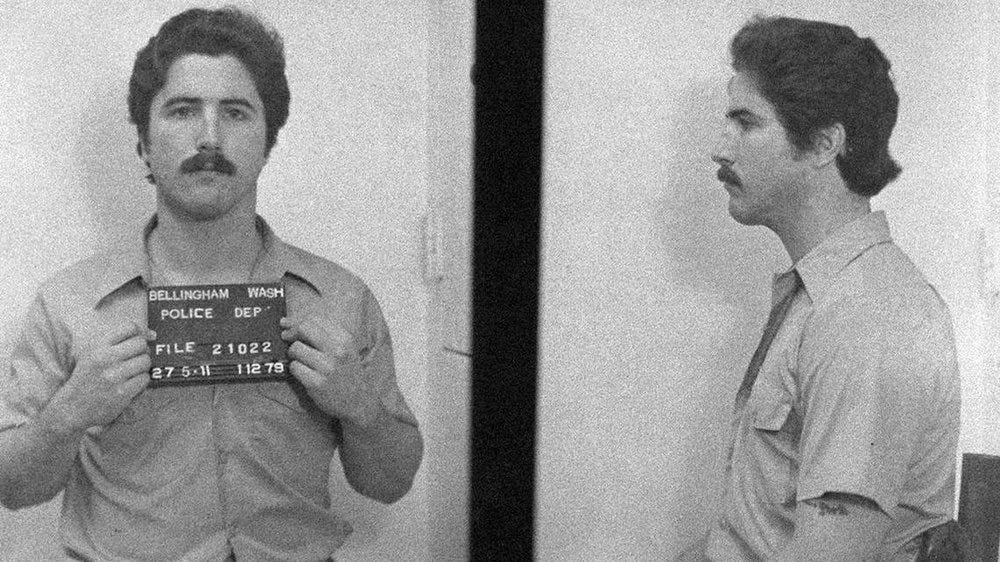
But the big break in the case came in January 1979, nearly a year after the last murder in Los Angeles, when police arrested Kenneth Bianchi in Bellingham, Washington, a college town not far from the US-Canada border, for the murders of Karen Mandic and Diane Wilder.
I dispatched a researcher to Washington, who returned with a stack of newspaper articles. They told a different story than what had appeared in the California press at the time.
In California, Van de Kamp distanced himself from the actual motion to dismiss the murder charges against Buono and threw his lead prosecutor, a man named Roger Kelly, under the bus. But in Washington State, news reports showed Van de Kamp pressured the Whatcom County District Attorney to abandon his plan to seek the death penalty for Kenneth Bianchi, in exchange for Bianchi testifying against his cousin.
My researcher also found a copy of Bianchi’s plea bargain. It bore the signature of none other than John Van de Kamp.
Bingo.
(Bianchi would later fail miserably as a prosecution witness, contradicting himself endlessly on the witness stand. Judge George later concluded Bianchi failed to uphold his part of the bargain, and returned him to Washington to serve his sentence in Walla Walla penitentiary, a fate Bianchi desperately hoped to avoid. Bianchi is still there.)
As it turned out, my Hillside Strangler files would remain locked away for more than 30 years. That’s because Dianne Feinstein, the former mayor of San Francisco, thrashed Van de Kamp and won the Democratic primary. Years later, in an oral history, Van de Kamp seethed over the ad she ran, which featured his role in the Hillside Strangler case.
The Hillside Strangler case stuck with me, in two respects:
My files became the foundation for the Hillside podcast.
When I presented my oppo research on John Van de Kamp to the Wilson political team, communications director Otto Bos was so delighted, he gave me a nickname.
More on that later.
(Bianchi mugshot: Whatcom County, Washington)